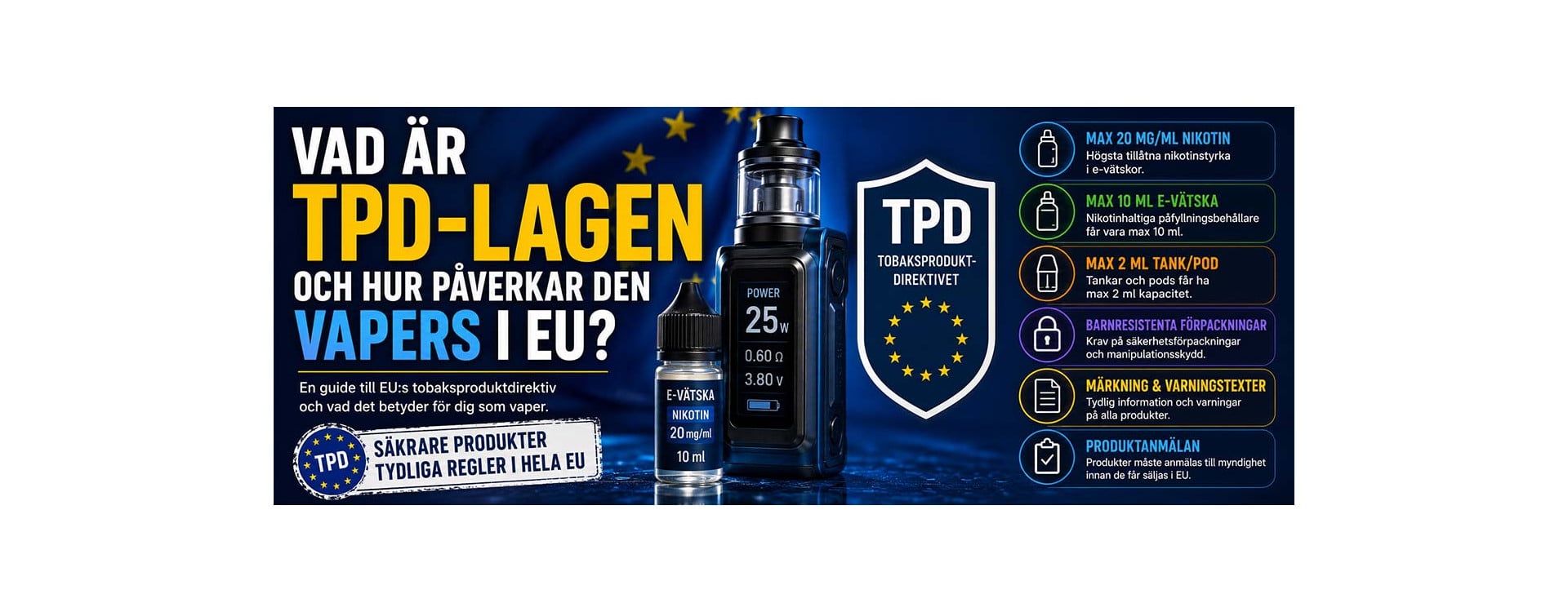
If you use vape products within the EU, you have probably been affected by the TPD regulations, even if you may not be familiar with the term. TPD is the regulatory framework that governs, among other things, how e-cigarettes, e-liquids and other nicotine products may be sold within the European Union.
The rules affect everything from how large bottles may be to how much nicotine a product may contain and what requirements apply to labelling, safety and product information.
In this article, we explain what TPD means, why the rules exist and how they affect users of vape products within the EU.
The short answer
TPD stands for Tobacco Products Directive. It is an EU directive containing rules for, among other things, cigarettes, rolling tobacco, e-cigarettes and nicotine-containing e-liquids.
For vape users, the rules affect nicotine strengths, bottle sizes, tank capacity, labelling, safety requirements and product notifications, among other things.
What does TPD mean?
TPD is an abbreviation of Tobacco Products Directive. The directive was adopted to establish common rules for tobacco and nicotine products within the EU.
The purpose is to ensure that products meet certain requirements before they may be sold to consumers. Although member states are responsible for implementing the rules nationally, the regulatory framework is based on the same fundamental directive.
For consumers, this means that many products look similar and comply with the same basic requirements regardless of whether they are sold in Sweden, Germany, France or other EU countries.
Why do the TPD regulations exist?
TPD was introduced to create a common regulatory framework for tobacco and nicotine products within the EU.
The regulatory framework covers, among other things:
- Product safety.
- Labelling and consumer information.
- Ingredient reporting.
- Product notifications.
- Child-resistant packaging.
- Common rules between member states.
The purpose is to create clearer requirements for both manufacturers and consumers.
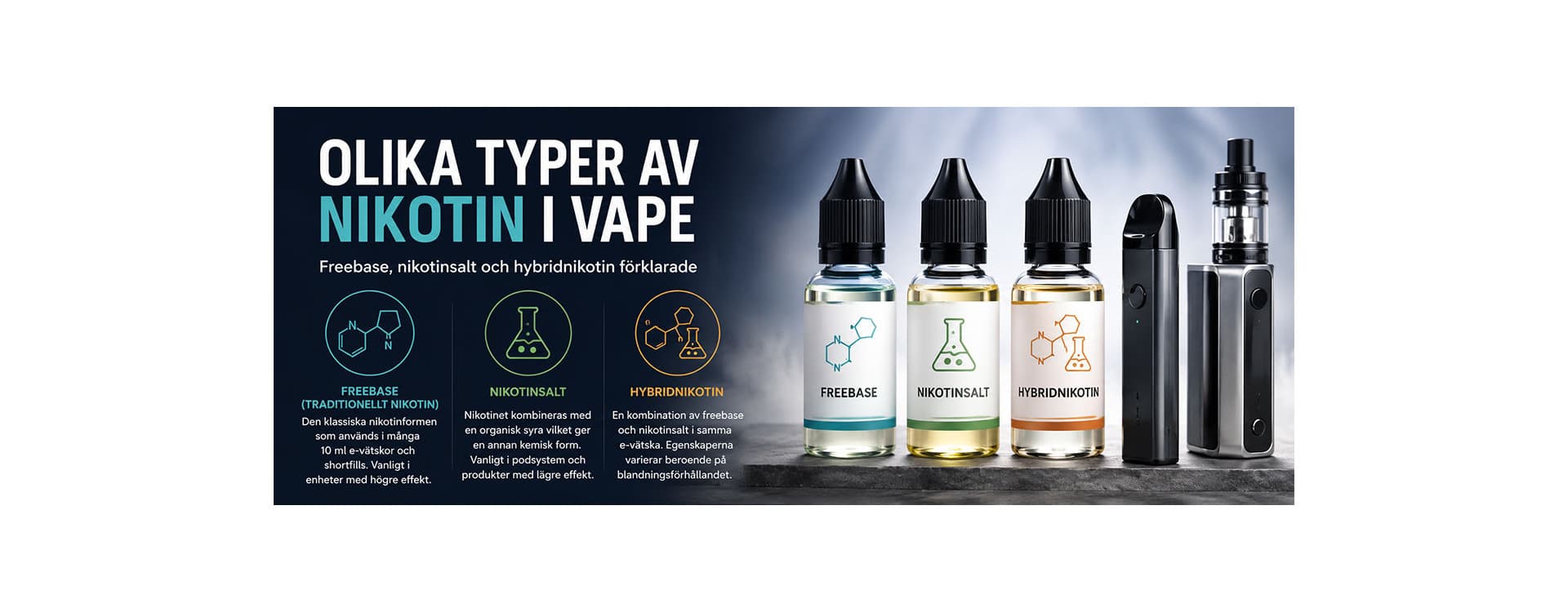
Maximum 20 mg/ml nicotine
One of the best-known parts of TPD is the restriction on nicotine strength in consumer products.
For nicotine-containing e-liquids sold under the TPD regulatory framework, the maximum nicotine strength is normally 20 mg/ml.
This affects, among other things, many types of nicotine salt sold on the European market.
Maximum 10 ml for nicotine-containing e-liquid
TPD also regulates the size of nicotine-containing refill containers.
This is why nicotine-containing e-liquids are commonly sold in 10 ml bottles.
If you want to understand why some products are sold in smaller bottles while others are available in larger formats, you can read our article about why nicotine salts are sold in small bottles and shortfills in larger ones.
Maximum 2 ml tanks and pods
Another part of the TPD regulatory framework is the restriction on tanks, cartridges and pods for certain products.
That is why many products sold within the EU have a maximum capacity of 2 ml.
It is also one of the reasons why the same product may sometimes differ between the EU market and other parts of the world.
Labelling and warning text requirements
TPD contains rules regarding product information and labelling.
Products must, among other things, include clear warning texts and certain information about contents, use and safety.
That is why you often see similar nicotine warnings on different products within the EU.
Child-resistant and safe packaging
Many nicotine products must also meet requirements for child resistance and tamper protection.
If you want to read more about how these safety features work, you can read our article about what childproof means in technical terms.
The purpose is to reduce the risk of accidental exposure and make the products safer to store.
Product notification before sale
Before many nicotine-containing products may be sold within the EU, manufacturers or importers need to submit product information to the relevant authorities.
This includes information about ingredients, contents, technical specifications and safety information, among other things.
Product notifications are also one of the reasons why new vape products are sometimes launched later in certain European countries than in other markets. If you want to read more about how product notifications, regulatory requirements and other processes affect launch times, you can read our article about why new vape products sometimes take time to reach the Swedish market.
How does TPD affect Swedish vapers?
For Swedish users, TPD is primarily noticeable through the rules governing which products may be sold within the EU.
Bottle sizes, nicotine strengths, tank capacity and safety requirements are all affected by the regulatory framework.
This means that many products on the Swedish market follow the same basic rules as in the rest of the EU.
Where can you read more about TPD?
If you want to read more about the regulations, information is available from both the EU and Swedish authorities.
- The EU Tobacco Products Directive (TPD)
- Public Health Agency of Sweden – Rules for e-cigarettes and refill containers
For the most up-to-date information, you should always refer to current legislation and information from the relevant authorities.
The most important things to remember
TPD is the EU regulatory framework that governs many aspects of e-cigarettes and nicotine-containing e-liquids. The rules affect nicotine strengths, bottle sizes, tank capacity, product notifications and safety requirements, among other things.
For users, this means that many products within the EU follow the same basic rules, regardless of which member state they are sold in.
By understanding TPD, it becomes easier to understand why certain products look the way they do and why certain restrictions exist on the European market.
Contains nicotine, which is a highly addictive substance. Age limit 18 years.