

Common Problems with Vape Batteries – Heat, Cold, Slow Charging and Overcharging
The battery is one of the most important components of a vape. It affects how long the device can be used between charges, how quickly it charges and how consistent its performance is during use. When the battery does not work as expected, questions commonly arise regarding heat, charging, cold temperatures and battery life.
Many of the problems experienced with vape batteries have natural technical explanations. At the same time, situations involving unusual heat generation, slow charging or reduced battery life may indicate that something needs to be checked.
In this guide, we go through common problems with vape batteries, why they may occur and what is important to consider regarding charging, temperature, storage and battery life.
How does the battery in a vape work?
Most modern vape devices use lithium-ion batteries. The same type of battery technology is also used in, for example, mobile phones, tablets, wireless headphones and laptops.
The battery stores energy that is used to heat the coil when the device is activated. When the coil heats up, the liquid in the tank or pod vaporises. The battery’s task is therefore not only to keep the device running, but also to deliver sufficient power in a stable manner.
How long the battery lasts is affected by factors including the battery’s capacity, the power used by the device, the coil’s resistance, how often the product is used and the temperature to which the device is exposed.
There are both vape devices with built-in batteries and models that use external batteries. If you use external batteries, it is important to choose batteries intended for this purpose and to handle them according to the manufacturer’s recommendations.
You can find various options in our category for vape batteries.
Why does my vape get hot while charging?
A certain amount of heat generation during charging is normal. When the battery is charging, some of the energy is converted into heat, which often makes the device feel slightly warmer than room temperature.
It is particularly common for a vape to become warm if the battery has a low charge level when charging begins, if the device has recently been used or if charging takes place in a warm environment. The charging speed can also affect how much heat is generated.
Common reasons why a vape becomes warm while charging may include:
- The battery has a low charge level when charging begins
- The device has recently been used
- Charging is taking place in a warm environment
- The charging cable or charger is worn
- The device uses a faster charging process
However, if the device becomes very hot, continues to increase in temperature or feels uncomfortable to hold, charging should be stopped until the cause has been investigated.
Common causes of unusual heat generation may include:
- Damaged charging cable
- Incorrect charger
- Dirt in the charging port
- Worn battery
- Electronic fault in the device
If your device becomes hot mainly when you use it, and not only while charging, the cause may be related to the coil, wattage setting or how often you puff. We have written more about this in the guide My e-cigarette gets hot – what should I do?, where we go through common causes of heat generation during use.
Another factor that can affect the temperature is fast charging. Some modern devices can charge significantly faster than older models, which can sometimes lead to greater heat generation during the charging process. In our article about Fast Charging and vape batteries, we explain how the technology works and what may be useful to know.
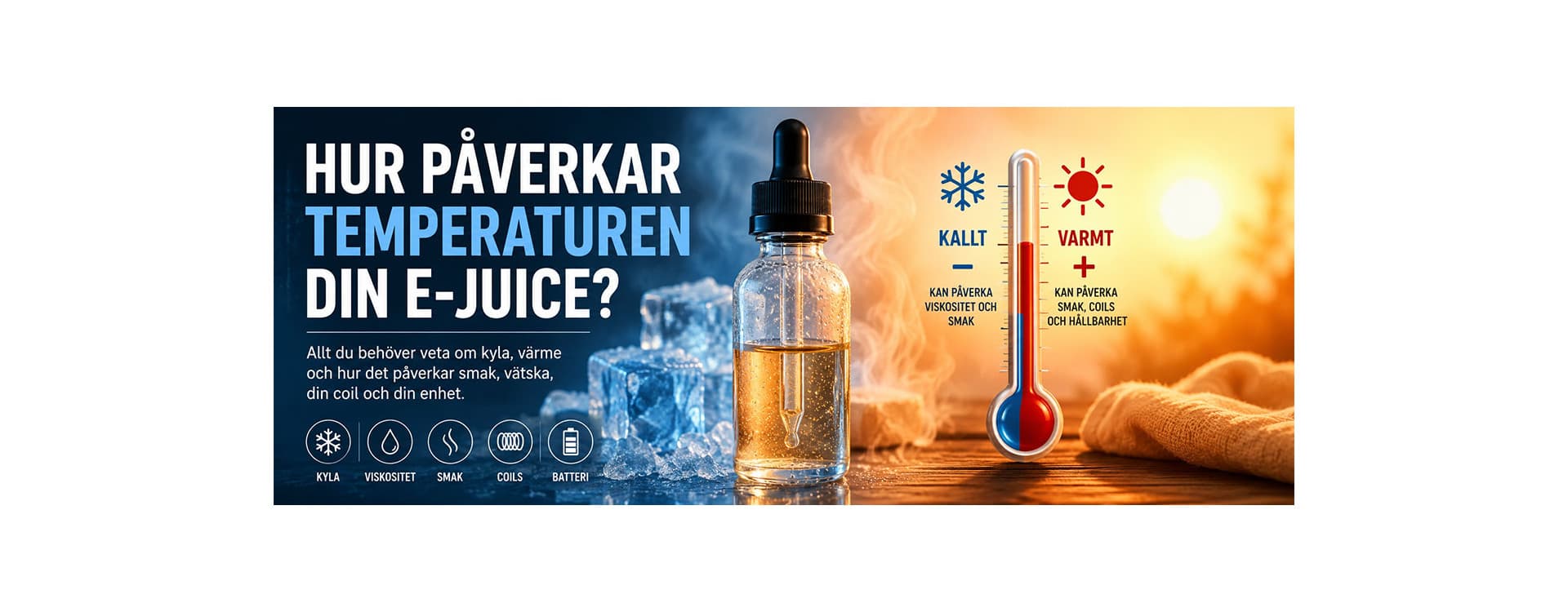
Can cold affect the battery in a vape?
Yes. Lithium-ion batteries are affected by temperature and generally perform less well in cold weather.
Lithium-ion batteries work through chemical reactions that move lithium ions between the battery’s various components. When the temperature drops, these processes slow down, meaning that the battery cannot deliver energy as efficiently as it can at normal room temperature.
This does not necessarily mean that the battery is damaged. In many cases, it is a temporary reduction in performance. For example, many users notice that the battery level appears to drop quickly on cold winter days, only to recover when the device is brought back into the warmth.
If you use your vape outdoors during the winter, you may therefore experience shorter battery life than usual. This is a known phenomenon for lithium-ion batteries and also applies to mobile phones, wireless headphones and other battery-powered products.
Cold can, among other things, lead to:
- Shorter battery life
- Weaker power
- Slower charging
- Inaccurate battery indicator
In most cases, the effect is temporary. When the device returns to a normal temperature, the battery’s performance usually recovers.
When the temperature drops, the battery may deliver a lower voltage under load. This can make the device feel weaker even though the battery still has charge remaining. A related phenomenon is what is commonly called Battery Sag, where the voltage temporarily drops when the battery is under load.
It is also a good idea to avoid charging a vape immediately after it has been exposed to severe cold. Let the device reach room temperature before starting to charge it.
Why is my vape charging slowly?
If a vape suddenly starts charging more slowly than before, the problem does not necessarily lie with the battery. The charging cable, charger or charging port may often be the cause.
Worn charging cable
A charging cable can wear internally even if it looks intact on the outside. If the cable has been bent frequently or used for a long time, charging may become slower or more inconsistent.
Dirt in the charging port
Dust, lint and dirt can accumulate in the charging port over time. This can impair the connection between the cable and the device, causing charging to take longer or stop.
Incorrect charger
Not all USB chargers deliver the same power. A charger with low output can make charging take longer than normal. A charger that is not suitable for the device can also make charging inconsistent.
If slow charging appears to be related to fast charging, the charger or the cable, it may be useful to understand how the technology works. Fast charging can affect both charging time and heat generation depending on the device’s charging support and the charging equipment being used.
Power bank and other power sources
Charging speed is also affected by the power source being used. Not all power banks and USB outlets deliver the same power. This can make charging take longer than when the device is charged with a suitable wall adapter.
If you often charge your vape with a power bank, charging time may vary depending on the power bank’s output and the device’s charging support. We cover this in more detail in the article Can you use a power bank to charge your vape?.
Battery age
All lithium-ion batteries age over time. After many charging cycles, the battery may have reduced capacity, charge more slowly and run out faster than before.
Battery performance is also affected by how heavily it is used over time. If you want to better understand battery specifications, you can read our guide to C-rate for vape batteries, where we explain how a battery’s load capacity is measured.
Can you overcharge a vape?
Many modern vape devices have protection circuits designed to stop or limit charging when the battery is full. This reduces the risk of traditional overcharging.
However, this does not mean that charging habits are unimportant. Batteries are still affected by heat, prolonged charging and natural wear.
To reduce unnecessary wear, it may be a good idea to:
- Unplug the device when it is fully charged
- Avoid charging in very hot environments
- Do not use damaged cables or chargers
- Do not charge a device that is unusually hot
- Follow the manufacturer’s instructions
To get the longest possible life from the battery, it is important to use suitable charging practices. We cover more practical tips in the article How to charge your e-cigarette in the best way.
How long does a vape battery last?
All lithium-ion batteries have a limited lifespan. Over time, the battery’s capacity decreases, meaning that it can no longer store as much energy as when it was new.
How long a vape battery lasts depends on factors including:
- How often the device is used
- How often the battery is charged
- Which temperatures the battery is exposed to
- How the battery is stored
- Which charging equipment is used
- How heavily the battery is loaded during use
Many lithium-ion batteries are designed for several hundred charging cycles before their capacity begins to decrease noticeably. A charging cycle does not necessarily correspond to a single charge, but rather to the total amount of energy charged and used over time.
For many users, battery ageing becomes noticeable when the device needs to be charged more often than before or when the battery level drops faster during use. A vape that previously lasted all day may, after prolonged use, need to be charged earlier in the day.
It is also common for the battery to feel less consistent as it gets older. For example, the device may perform well immediately after charging but lose power more quickly as the battery level drops.
How should you store a vape battery?
Storage can affect both battery life and performance. Batteries generally perform best when stored at a stable temperature and protected from extreme temperatures.
For longer-term storage, it may be useful to consider the following:
- Avoid direct sunlight for extended periods
- Do not leave batteries in a hot car
- Avoid very cold environments for extended periods
- Store external batteries in a battery case
- Protect the battery from moisture and water
High heat is often more harmful to battery life than temporary cold. If a battery is regularly exposed to high temperatures, its capacity may decrease more quickly over time.
For users who have several external batteries, it may also be a good idea to label them and use them evenly, so that the same battery is not subjected to significantly more use than the others.
A practical example is not leaving a vape in a car during the summer. The temperature inside a parked car can become significantly higher than the outdoor temperature, which can affect both the battery and other parts of the device.
Common mistakes that wear out the battery
Most batteries deteriorate gradually over time, but certain habits can accelerate wear.
Some common examples include:
- Regularly leaving the device in direct sunlight
- Storing the device in a hot car during the summer
- Using damaged charging cables
- Continuing to use batteries with visible damage
- Exposing the battery to recurring extreme temperatures
- Often allowing the battery to become completely discharged before charging
Many users focus primarily on charging, but temperature is often at least as important a factor for the battery’s long-term health. A battery that is regularly exposed to high heat may age faster even if it is charged correctly.
A common example is charging the device immediately after intensive use, when it is already hot. This can expose the battery to additional heat for a longer period. In such cases, it may be better to let the device cool down before charging.
Another example is using the same external battery every day while other batteries remain unused. If the batteries are used unevenly, one battery may wear out faster than the others.
When should you stop using a battery?
All batteries have a limited lifespan. Over time, capacity deteriorates, and certain signs may indicate that the battery should be checked or replaced.
Pay attention if:
- The battery runs out significantly faster than before
- The device becomes unusually hot
- Charging stops without an obvious reason
- The battery level jumps up and down
- The device charges very slowly
- The battery shows signs of physical damage
Many users first notice that something is wrong when battery life deteriorates. If a device that previously lasted all day suddenly needs to be charged several times a day, it may be a sign that the battery is nearing the end of its normal lifespan.
Another common sign is that the battery level drops quickly, for example from 40 per cent to 10 per cent, without any change in usage. Such symptoms do not always mean that the battery is faulty, but they may indicate that its capacity has deteriorated over time.
If the battery feels weaker than before, it does not necessarily mean that it is faulty. In some situations, it may be due to temporary voltage drops that occur when the battery is under load.
If you want to understand how much load a battery can handle, you can read our article What does C-rate mean for batteries and why does it matter?, where we explain how battery capacity and load are connected.
If a battery is swollen, leaking, smells unusual or has visible damage, it should not be used. For external batteries, it is recommended that they be taken to a recycling facility in accordance with local guidelines.
The difference between built-in and external batteries
Many modern vapes use built-in batteries that are charged directly via the USB port on the device.
More advanced devices may use external batteries that are removed from the device for charging or replacement. These batteries often provide greater flexibility but also require more knowledge of safe handling.
External batteries should be stored in a battery case and not carried loose together with metal objects such as keys or coins. If the battery’s protective wrap is damaged, the battery should not be used until it has been inspected or replaced.
For charging cables, battery cases and other relevant products, you can also visit our category for e-cigarette accessories.
Important to remember
Heat, cold, slow charging and questions about overcharging are common topics when it comes to vape batteries. A certain amount of heat during charging is normal, and cold can temporarily affect the battery’s performance.
Slow charging is often caused by the cable, charger, temperature or the battery’s age. Modern vape devices usually have protection against overcharging, but it is still wise to use good charging practices and follow the manufacturer’s recommendations.
Battery life is affected by how the battery is used, charged and stored. High heat, damaged cables, incorrect storage and recurring heavy loads can cause the battery to age more quickly.
If the device becomes unusually hot, charges very slowly or shows signs of damage, it should not be used until the cause has been checked.