
Vape juice ending up in the airflow channel can happen in pod systems, tanks, and other types of vape devices. It is often noticeable through gurgling sounds, leakage, weaker vapor production, or e-liquid collecting around the mouthpiece or air intake.
The cause is usually that the e-liquid is moving in the wrong direction inside the device. This may be due to overfilling, thin e-liquid, a worn coil, improper storage, temperature changes, or using the device in a way that causes the liquid to be pushed toward the airflow channel.
If you want to read more about different types of vape juice, you can find our range and more information here.
What Is the Airflow Channel?
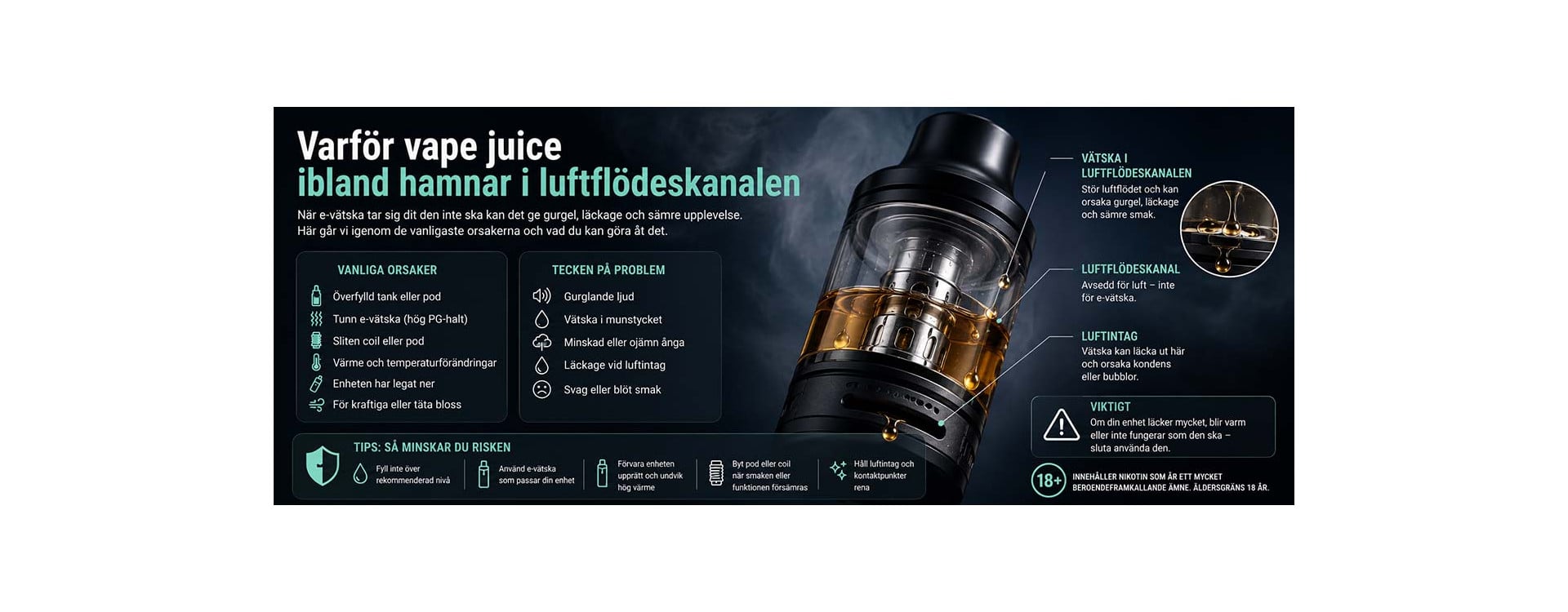
The airflow channel is the path that air takes through a vape when you inhale. The air passes through the device, over the coil, and up through the mouthpiece. The channel is therefore intended for air and aerosol, not for larger amounts of e-liquid.
If e-liquid ends up in the airflow channel, it can interfere with the device's function. This can cause the device to gurgle, leak, or feel uneven during use.
Why Does Vape Juice End Up in the Airflow Channel?
There are several common reasons why e-liquid ends up where it should not be. In many cases, it is not because the product is faulty, but because of how the liquid, coil, airflow, and pressure interact.
The Device Is Overfilled
If a tank or pod is filled above its recommended level, e-liquid can more easily be pushed into the air channel. This is particularly common if the filling area is small or if the liquid comes close to the air intake.
The Coil or Pod Is Worn
A worn coil or pod may have more difficulty keeping the liquid in the right place. The wick may become saturated, seals may be affected, and liquid may begin to take other paths through the device.
The E-Liquid Is Too Thin
Some e-liquids are thinner than others. Liquids with a higher proportion of PG are often more fluid, while liquids with a higher proportion of VG are usually thicker. If the liquid is too thin for a particular coil or pod, it may flow through more easily and end up in the airflow channel.
Temperature Changes Affect the Pressure
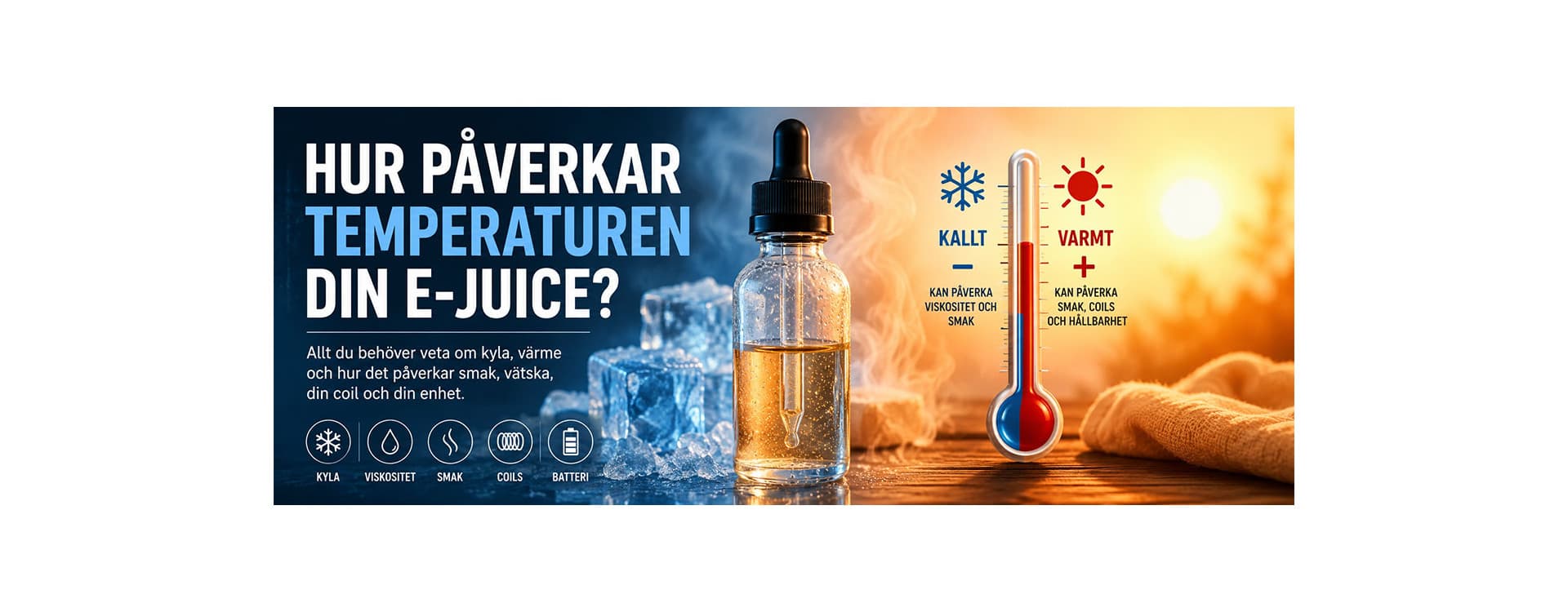
Heat can make e-liquid thinner and more mobile. If a vape is stored in a hot car, near a radiator, or in direct sunlight, the liquid can more easily leak or be pushed into the air channel.
The Device Has Been Stored Incorrectly
If a vape is left lying down for an extended period, the liquid may move toward the air intake or mouthpiece, especially if the tank or pod is already warm, full, or worn.
Overly Strong or Frequent Puffs
If the airflow becomes too strong, more liquid may be drawn toward the coil and air channel than the device can convert into aerosol. This can cause gurgling, splattering, or liquid in the mouthpiece.
Signs That E-Liquid Has Ended Up in the Airflow Channel
- The device gurgles during use.
- Liquid gets into the mouthpiece.
- Vapor production feels uneven.
- It leaks from the air intake.
- The flavor feels weaker or wetter than usual.
- Condensation or liquid collects around the pod or tank.
If the problem occurs only occasionally, it does not necessarily mean that the device is defective. If it happens frequently, however, it may be a sign that the pod, coil, or liquid are not working optimally together.
Is It Dangerous if Vape Juice Ends Up in the Airflow Channel?
Small amounts of condensation or e-liquid in the air channel are relatively common, but liquid should not regularly leak out or end up in the mouthpiece. Nicotine-containing e-liquid should be handled with care and should not come into contact with skin, eyes, or the mouth in liquid form.
If the device leaks heavily, tastes unusual, becomes hot, or does not work as it should, you should stop using it and check the condition of the product.
Can You Reduce the Risk of Liquid in the Airflow Channel?
Yes, in many cases you can reduce the risk by using the product according to the manufacturer's instructions and paying attention to how the device is filled, stored, and used.
- Do not fill above the recommended level.
- Use e-liquid that is suitable for the device's coil or pod.
- Store the device upright whenever possible.
- Avoid direct sunlight and high heat.
- Replace the pod or coil if the flavor becomes burnt, weak, or gurgling.
- Keep the air intake and contact points clean and dry.
- Do not use a device that leaks heavily or becomes unusually hot.
When Should You Replace the Pod or Coil?
If liquid repeatedly ends up in the airflow channel, it may be a sign that the pod or coil is becoming worn. This is especially true if the problem is accompanied by a burnt taste, weak vapor production, leakage, or gurgling sounds.
A pod or coil is a consumable component and should be replaced when it no longer works as it should.
The Most Important Things to Remember
Vape juice can end up in the airflow channel for several reasons, such as overfilling, thin e-liquid, a worn pod, temperature changes, or improper storage. Often, it is because the liquid is moving through the device in a way that disrupts the airflow.
If the problem occurs frequently, you should check the pod, coil, liquid, and storage conditions. A device that leaks heavily, becomes hot, or works unevenly should not continue to be used.
Contains nicotine, which is a highly addictive substance. Age limit 18 years.