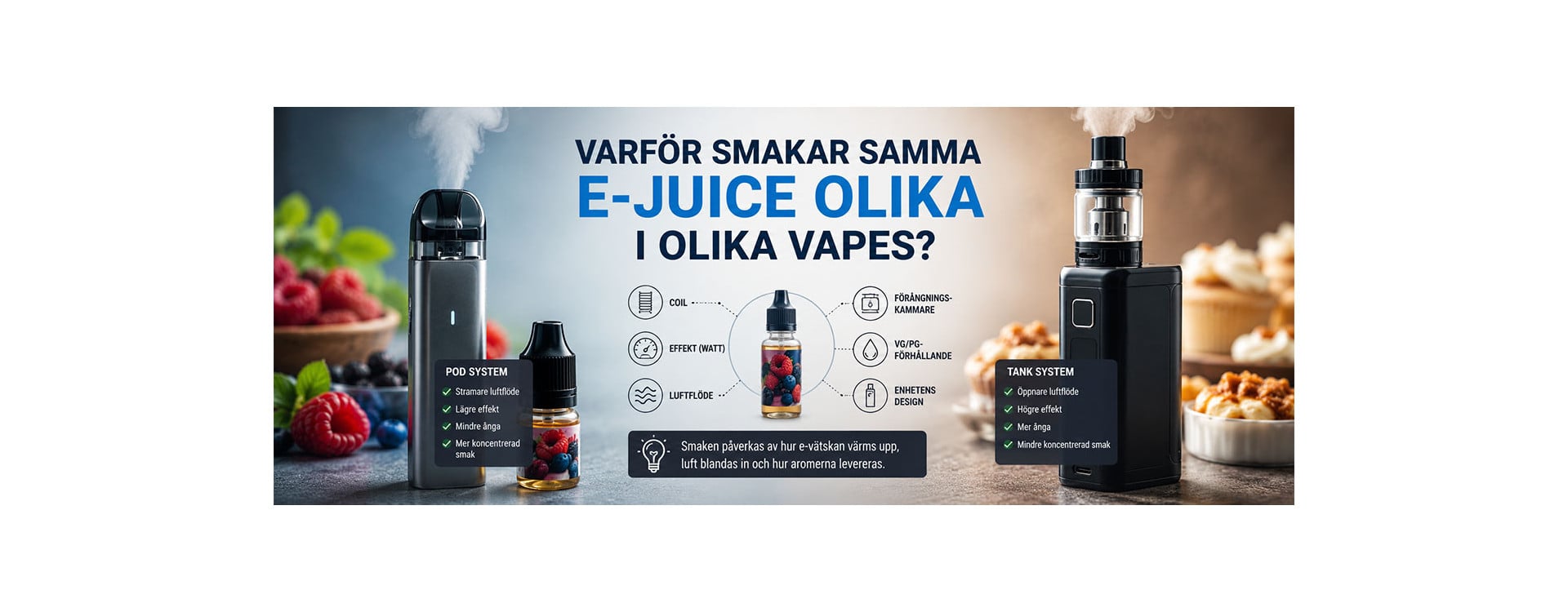
Why Does the Same E-Liquid Taste Different in Different Vapes?
The same e-liquid can be experienced differently depending on which vape it is used in. A flavor that feels distinct in one device may seem milder, sweeter, warmer, or more intense in another. This is usually not because the e-liquid has changed, but because different devices heat and vaporize the liquid in different ways.
In this article, we explain why the same e-liquid can produce different flavor experiences in different vapes and which technical factors affect the result.
Why do different vapes affect the flavor?
A vape works by transporting e-liquid to a coil, where the liquid is heated and converted into aerosol. How this process takes place affects how the flavors are experienced.
Factors that can affect the flavor include:
- Coil construction
- Power setting
- Airflow
- Size of the vaporization chamber
- Pod or tank design
- VG/PG ratio
- Whether the device is used for MTL or DTL
Since different vapes are designed in different ways, the same e-liquid can be experienced differently between different devices.
The coil has a major impact on the flavor
The coil is the part of the device that heats the e-liquid. Different coils have different resistances, heating surfaces, and constructions. This affects how quickly the e-liquid heats up and how much aerosol is produced.
A coil with a larger heating surface can provide a different flavor reproduction than a smaller coil. Mesh coils, for example, can distribute heat over a larger surface, while traditional coils can provide more concentrated heating.
If you want to learn more about how coils work, you can read our guide on how to choose the right coil.
Wattage and temperature affect the flavors
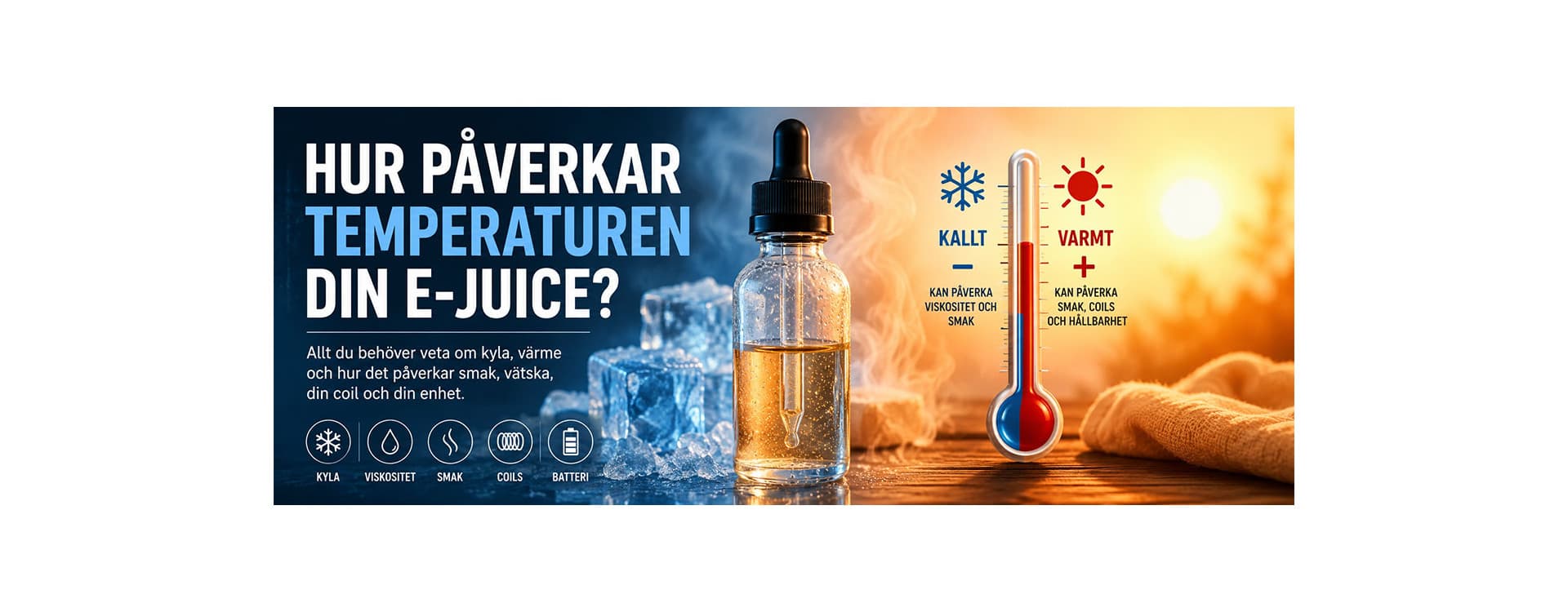
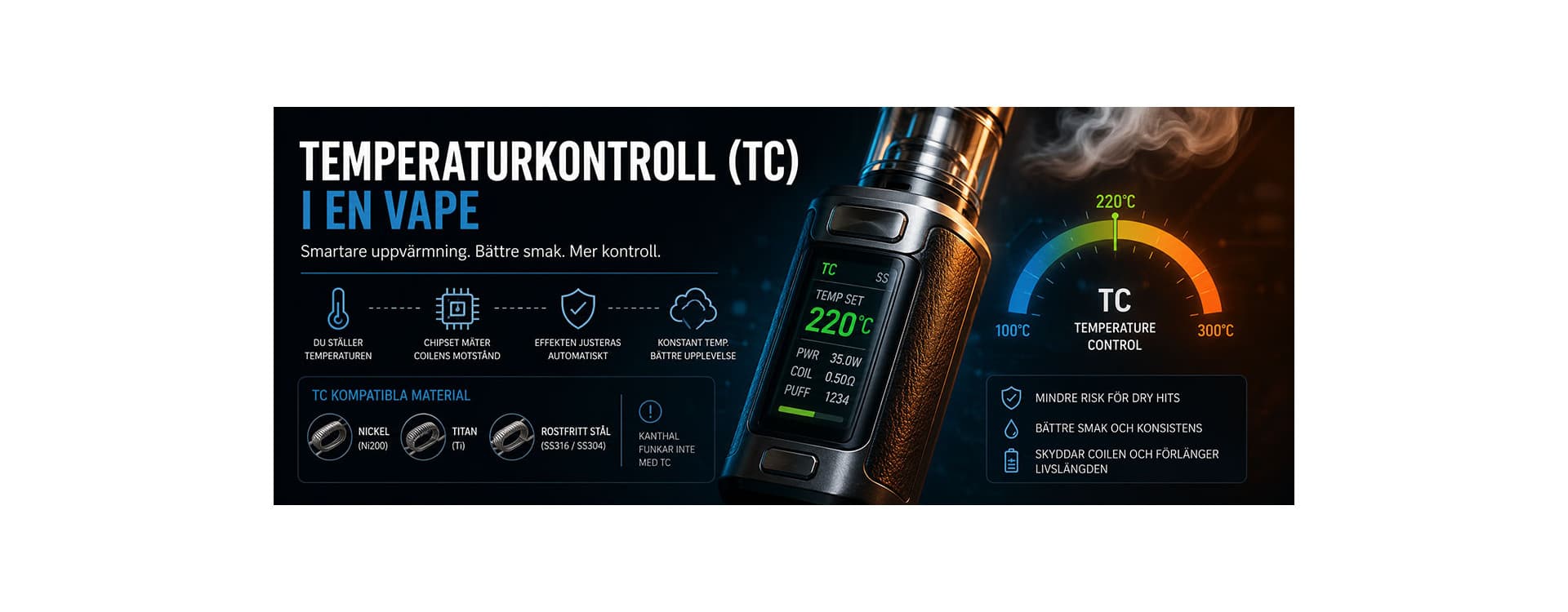
The power in a vape is often stated in watts. When the power is increased, the coil becomes hotter and the e-liquid vaporizes more quickly. This can affect which flavor notes stand out the most.
At lower power, some flavors may be experienced as cooler and milder. At higher power, the same e-juice may feel warmer, fuller, or sweeter. However, if the power is too high for the coil, the flavor may become unbalanced or burnt.
As the power increases, a larger amount of e-liquid is vaporized per second. This can make certain flavor compounds seem stronger while other notes become less prominent. Therefore, a fruit-based e-liquid may be experienced differently at low power compared with higher power.
For more information about power settings, you can read our article on watts, volts, and puff counters in a vape.
Airflow affects flavor concentration
Airflow determines how much air is mixed with the aerosol. More restricted airflow can make the flavor more concentrated, while more open airflow often produces more vapor but a more diluted flavor experience.
That is why the same e-juice can feel more pronounced in a smaller pod with tighter airflow than in a larger device with a more open draw.
The vaporization chamber affects the flavor more than many people think
A factor that is often overlooked is the vaporization chamber. The vaporization chamber is the space where the aerosol is formed before it travels through the mouthpiece.
Vapes with smaller vaporization chambers can often provide a more concentrated flavor because the aerosol is not mixed with as much air before it is inhaled. Larger chambers, on the other hand, can provide a more airy sensation in which certain flavor nuances are perceived as less intense.
This is one of the reasons why the same e-juice can taste different in two devices that use similar coils and power settings.
MTL and DTL provide different flavor experiences
MTL and DTL are two different ways of using a vape. MTL stands for mouth-to-lung and usually involves lower power, tighter airflow, and a smaller amount of vapor. DTL stands for direct-to-lung and often involves higher power, more open airflow, and greater vapor production.
The same e-juice can therefore be experienced differently depending on whether it is used in an MTL device or a DTL device. A flavor that feels distinct in MTL may feel more diluted in DTL because more air is mixed in.
You can read more in our guide on the difference between MTL and DTL.
VG and PG affect how the e-liquid works
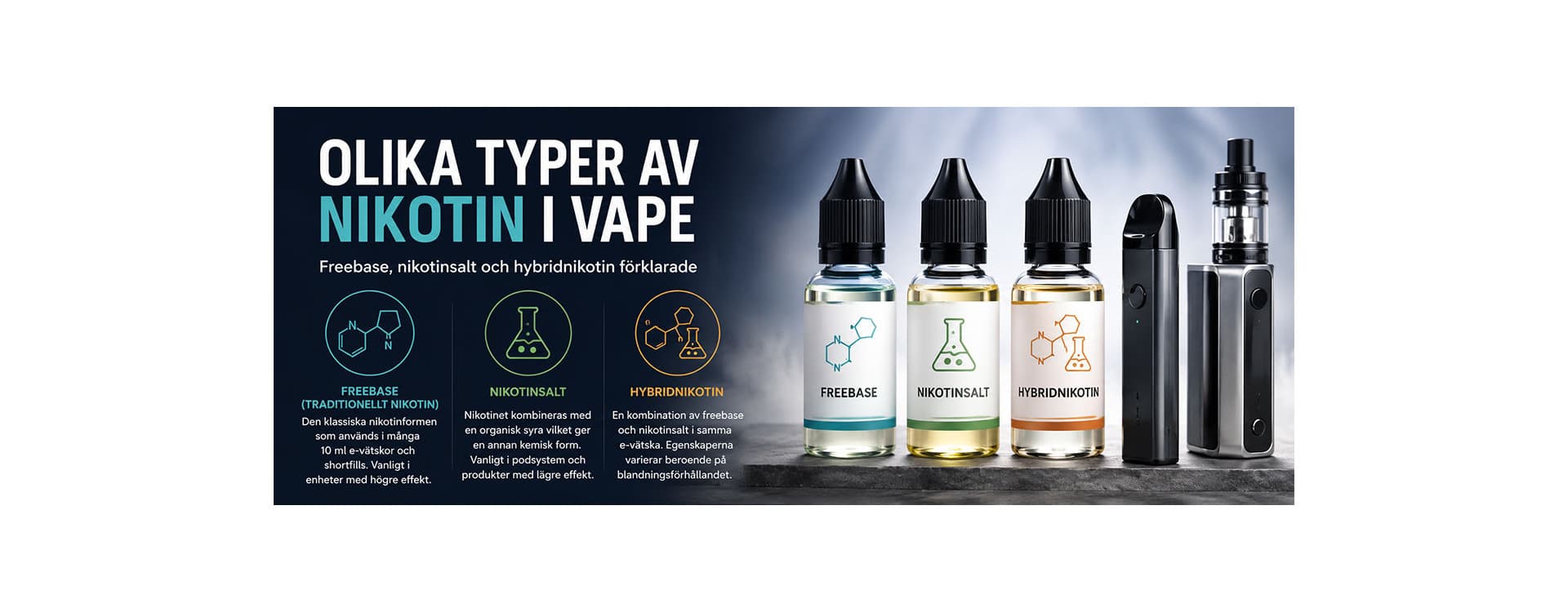
E-juice usually consists of VG, PG, flavorings, and sometimes nicotine. The ratio between VG and PG affects consistency, flavor, and vapor production.
- A higher PG content often provides a thinner liquid and more pronounced flavor.
- A higher VG content often provides a thicker liquid and more vapor.
Not all devices are adapted for all types of e-liquids. A thinner liquid may work better in smaller pod systems, while a thicker liquid is often used in more powerful devices. If the e-liquid is not suitable for the device, the flavor may be affected.
For more information, you can read our article on VG/PG ratios or browse our range of vape juice.
Why can fruit, dessert, and mint flavors be experienced differently?
Different flavorings can be experienced differently depending on heat, airflow, and coil type. Therefore, the same vape setting can affect different flavors in different ways.
- Fruit flavors may be experienced more clearly at low to medium power.
- Dessert and cream-based flavors may feel fuller at higher power.
- Mint and menthol flavors may feel stronger in devices with more concentrated airflow.
This means that the same e-liquid can provide different flavor experiences depending on how the device is designed and which settings are used.
Pod and tank design can change the flavor
Even if two vapes use similar coils, the flavor can differ. This is because pods and tanks are designed in different ways.
Factors that can affect the flavor include, for example:
- How close the coil is to the mouthpiece
- How the air channels are positioned
- How large the vaporization chamber is
- How quickly e-liquid is transported to the coil
A smaller pod can provide a more concentrated flavor, while a larger tank can provide more airflow and vapor. This is a common reason why the same e-juice can be experienced differently in different systems.
Feel free to read more about the difference between open and closed vape pods.
A new coil or pod may taste different
A new coil or pod may produce a different flavor during the first use. The cotton needs to become evenly saturated with e-liquid, and the coil may change slightly after the first heating cycles.
This can make the flavor become more stable after a short period of use. However, if the flavor becomes burnt, weak, or uneven, it may be because the coil is not working as intended.
More information about this can be found in our article on why a new pod may feel different during the first few days.
How does the age of the coil affect the flavor?
The flavor experience is affected not only by which coil is used but also by the condition of the coil. When a coil is used over time, residue from flavorings, sweeteners, and other ingredients in the e-liquid builds up.
This residue can make certain flavor notes less distinct. In some cases, the flavor may seem dull or changed even though the same e-juice is being used.
If you want to learn more about this, you can read our article on why a vape coil turns black.
Example: the same e-juice in two different vapes
Suppose that a fruit-flavored e-juice is used in two different devices:
- A pod with a 0.8-ohm coil, restricted airflow, and low power.
- A sub-ohm device with open airflow and higher power.
In the pod system, the flavor may be experienced as more concentrated and distinct. The sub-ohm device often produces more aerosol while mixing in larger amounts of air. The flavor may therefore be experienced differently even though exactly the same e-juice is being used.
This does not mean that one device reproduces the flavor more accurately than the other. They present the flavorings in different ways.
Key takeaways
It is normal for the same e-juice to taste different in different vapes, and this is due to several technical factors. The coil’s construction, power setting, airflow, vaporization chamber, VG/PG ratio, and the device’s design affect how the flavorings are experienced.
The age and condition of the coil can also change the flavor experience over time. Therefore, the same e-liquid can produce different results in different devices even though the liquid itself is the same.
To achieve a more consistent flavor experience, it is important to use an e-liquid that suits the device’s construction and recommended area of use.
Quick facts
- The same e-juice can taste different in different vapes.
- The coil, wattage, and airflow affect flavor reproduction.
- The vaporization chamber affects how concentrated the flavor seems.
- MTL and DTL provide different concentrations of flavor and vapor.
- The VG/PG ratio should suit the device’s construction.
- Pod and tank design can change how the flavorings are experienced.
- An older coil can change the flavor over time.