

Reducing the use of traditional cigarettes can have a positive effect on overall health, and e-cigarette use can be a tool to help smokers gradually reduce their smoking. However, it is important to note that using e-cigarettes also carries its own health risks and that these risks are still being investigated by researchers around the world.
Researchers at Rutgers University in the USA recently conducted a study to assess the health risks of using electronic cigarettes. The results showed that the vapor from an e-cigarette contains concentrations of carcinogenic aldehydes between 125 and 10,000 times lower than the smoke from a conventional cigarette.
A big difference between 125 and 10,000 times—what affects it?
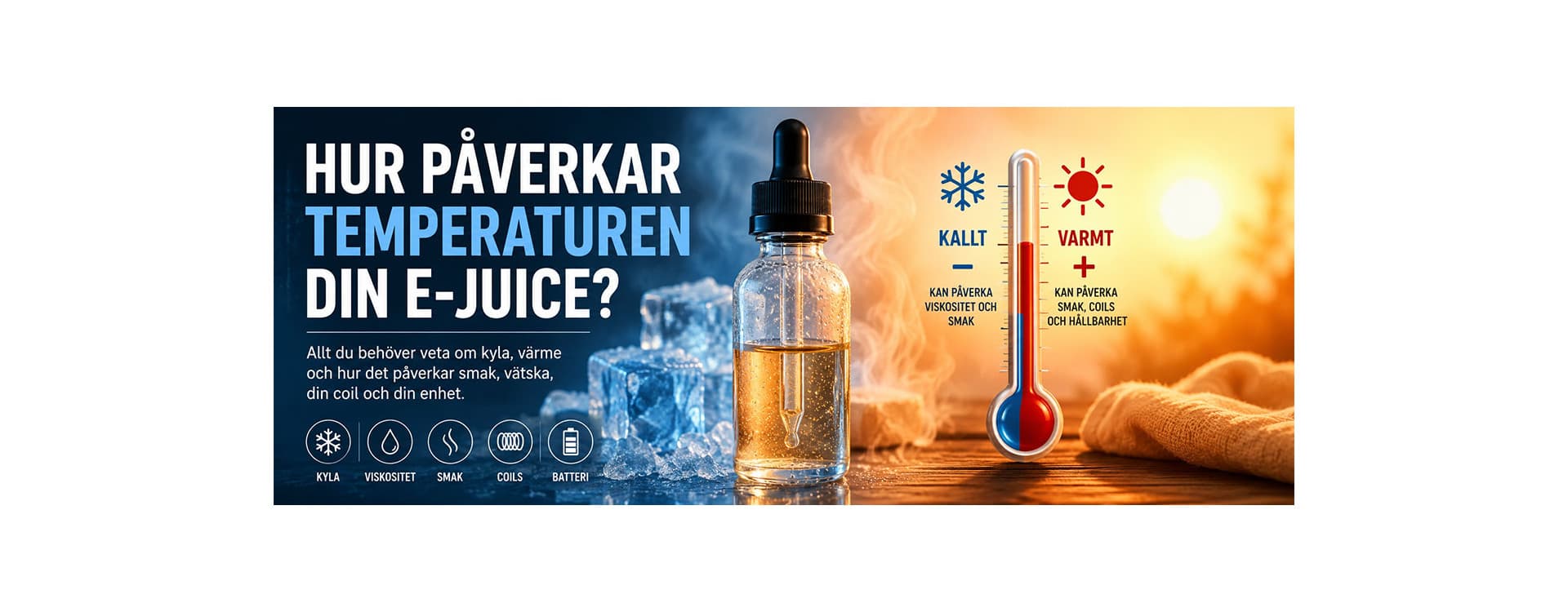
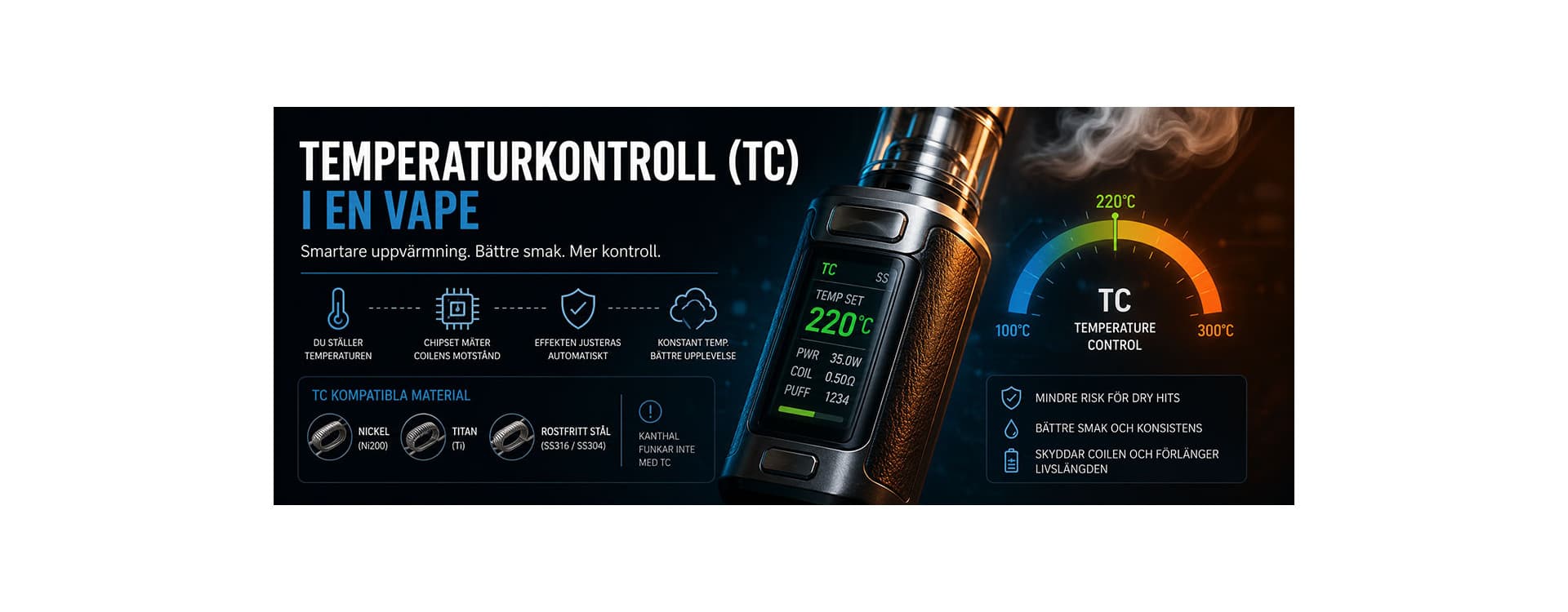
The researchers pointed out that the concentration of potentially harmful substances can vary depending on how the e-liquid is heated in the tank and by the coil. This means that it is important for users of e-cigarettes to be aware of how to use the vaporizer safely—and to use e-liquids made with high-quality flavorings (Read: buy e-liquid from well-known, EU-approved, and legitimate manufacturers).
Change coils often and use modern coils
The study also highlights the importance of using modern atomizers for e-cigarettes; modern e-cigarettes can reduce health risks for users. The researchers tested atomizers in which the vaporization of the e-liquid takes place at the bottom of the atomizer (all modern, quality e-cigarettes have this) and found that these handled heat significantly better than older models that use, for example, a wick for vaporization. Regardless of the temperature to which the researchers exposed the coil, it produced significantly fewer potentially carcinogenic substances than are found in cigarette smoke.
Although the concentration of potentially carcinogenic substances increases with power, the results show that they nevertheless remain far below the concentration in cigarette smoke.
More risks with high-PG liquids
Researchers have conducted tests to investigate the difference between propylene glycol (PG) and vegetable glycerin (VG)
The results show that vegetable glycerin begins to break down and form potentially carcinogenic substances at a temperature of 200 degrees. Propylene glycol, on the other hand, begins to react as early as 127 degrees, which affects the risk of higher concentrations of potentially carcinogenic substances.
This discovery shows that e-cigarette use may be a less dangerous alternative for smokers who want to reduce their health risks. Although the results are promising, researchers continue to investigate the health risks of e-cigarette use and urge continued caution until more research has been conducted.
Research on Diacetyl—"Popcorn Lung"
According to the research, there is no risk of popcorn lung when using e-cigarettes. The researchers examined the amount of diacetyl, a buttery flavoring, in various flavorings, particularly Bavarian cream and sweet cream, which are commonly found in e-liquid.
Diacetyl has been the subject of debate because of its ability to cause popcorn lung. Although cigarette smoke contains high levels of diacetyl, the disease has never been found in either vapers or smokers. However, the researchers point out that although several e-liquid manufacturers have replaced diacetyl with other buttery flavors, these can also form diacetyl when heated. Despite this, only small amounts of diacetyl were found, far below levels posing a health risk.
Read the full research report here: "The impact of Device Settings, Use Patterns, and Flavoring on Carbonyl Emission from Electronic Cigarettes"
All text is taken from the information in the research report. We do not take a position on the issues but merely convey the information.
happy vaping / your friends at cigge