
Will the EU’s new battery rules change the vape market in 2027?
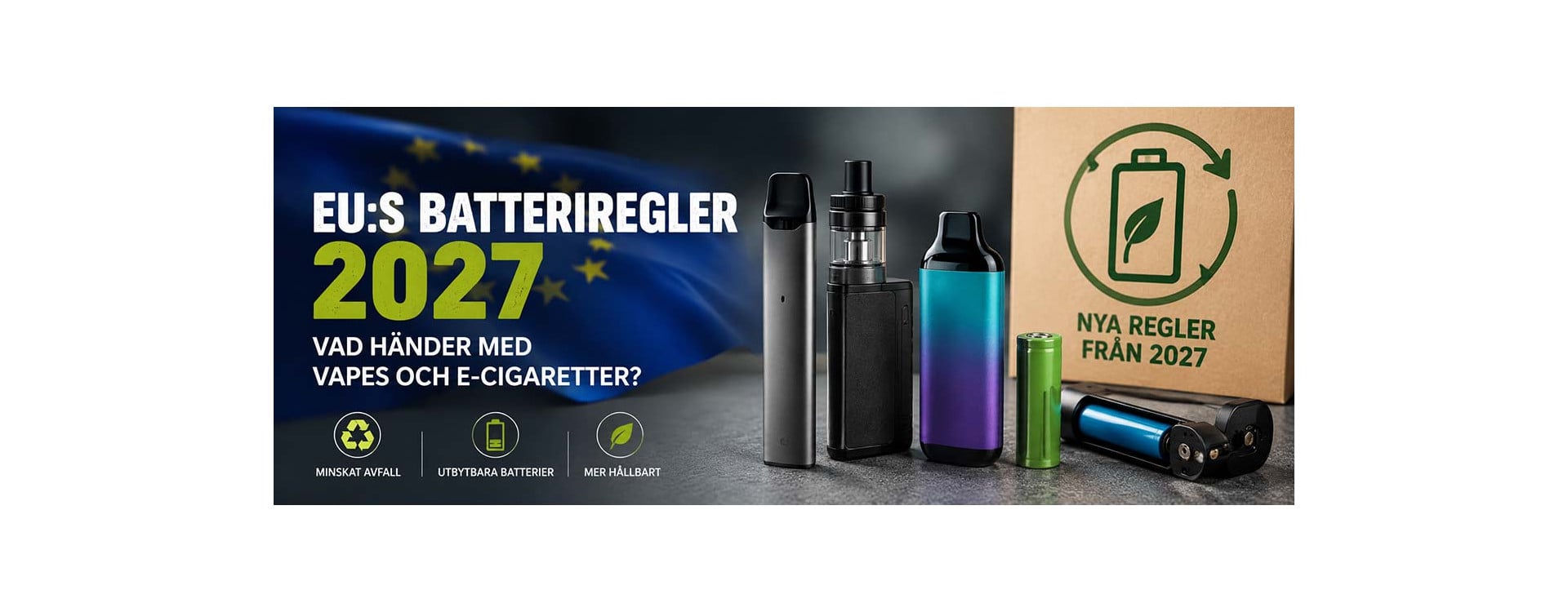
The EU’s new Battery Regulation has attracted significant attention following reports that mobile phones from 2027 may need to have batteries that are easier to replace. The discussion has primarily focused on smartphones, but the rules cover significantly more product categories than that.
One question now being raised within the vape industry is whether the same rules could have consequences for products with built-in batteries. This includes many modern vapes, where the battery is a central part of the product’s design.
What do the EU’s new battery rules mean?
The aim of the EU’s Battery Regulation is to reduce waste, improve recycling and make it easier to repair products instead of replacing them.
In recent years, many products have been equipped with built-in lithium batteries that are not intended to be replaced by the user. When the battery wears out or the product becomes unusable, the entire device often ends up as waste even though large parts of it still work.
The EU therefore wants to establish clearer requirements regarding battery life, recycling and, in certain cases, the ability to remove or replace the battery.
The rules are based on the EU’s new Battery Regulation, which aims to reduce electronic waste and improve recycling within the Union.
Do the rules also apply to vapes?
The Battery Regulation is not specifically aimed at vape products, but it covers products that use portable batteries.
This means that certain types of vapes may be affected depending on how the products are designed and how future interpretations of the regulations develop.
Products with built-in lithium batteries are of particular interest, especially where the entire device is discarded when the e-liquid runs out or when the product no longer works.
Disposable vapes may come into focus
One of the biggest discussions concerns disposable vapes.
Unlike many other electronic products, a disposable vape is designed to be used for a limited period before the entire device is thrown away. At the same time, the product usually contains a lithium-ion battery that still has value from a recycling perspective.
This has raised questions about how well such products fit into the EU’s long-term goals of reducing electronic waste and increasing resource efficiency.
Although the Battery Regulation does not explicitly ban disposable vapes, developments within the EU point towards an increased focus on reuse, recycling and longer product lifespans.
Do the rules mean a ban on disposable vapes?
No, the EU’s Battery Regulation does not in itself mean a ban on disposable vapes.
However, requirements concerning battery management, recycling and sustainable product design may affect how future products are developed. Manufacturers may need to adapt their products to meet upcoming requirements, which could gradually change the disposable vape market.
That is why many people in the industry are following developments closely ahead of 2027.
Reusable systems may play a greater role
Products where the battery section is used for a longer period while only pods or containers are replaced are more closely aligned with the principles the EU wants to achieve.
Pod systems and other reusable vape devices have already become an important part of the market and may become even more significant if future regulations make it more difficult to sell products that are discarded in their entirety after a short period of use.
For many users, vape systems with replaceable pods could become an alternative that is more in line with the EU’s ambition for longer product lifespans.
These developments are driven both by environmental requirements and by a desire to reduce the number of batteries that end up as waste.
What will happen to vapes after 2027?
It is still too early to say exactly how the Battery Regulation will affect the vape market in practice.
Much will be determined by how the rules are applied, which exemptions are introduced and how manufacturers choose to adapt their products.
What is already clear, however, is that the EU’s focus on sustainability, recycling and battery management is likely to influence the development of future vape products.
For both manufacturers and consumers, the coming years may bring changes in how products are designed, used and recycled.
Frequently asked questions about the EU’s battery rules and vapes
Will disposable vapes be banned in 2027?
No, the EU’s Battery Regulation does not automatically mean a ban on disposable vapes. However, the rules may affect how future products are designed and how batteries are handled.
Do the rules apply to all vapes?
The rules are not specifically written for vape products, but certain types of vapes with built-in batteries may be affected by requirements concerning battery management and recycling.
What is the difference between disposable vapes and pod systems?
Disposable vapes are intended to be discarded when the product is finished, while pod systems use the same battery unit for a longer period and only the pod is replaced.
May vape manufacturers need to change their products?
Yes, it is possible that some manufacturers will need to adapt their products depending on how the rules are applied and which technical requirements apply after 2027.
Key points to remember
The EU’s battery rules from 2027 are primarily about reducing waste and improving battery recycling. Although the rules are not specifically aimed at vape products, certain types of vapes may be affected.
Products with built-in batteries and short lifespans in particular may come under scrutiny when the legislation begins to be applied. At the same time, reusable systems and products with longer lifespans may play a greater role in the market in the coming years.
Developments concerning battery regulations and product requirements are part of the changes affecting the vape market in the coming years.